Truth and Courage

“Courage is not the absence of fear; it is the making of action in spite of fear, the moving out against the resistance engendered by fear into the unknown and into the future.” M. Scott Peck

Step Four asks us to make a thorough and fearless moral inventory. I took more time with this step than any other step in my recovery program. I kept telling myself I was preparing my thoughts, waiting for the right time and hoping to be inspired. What I was really doing was working on a character trait that still dogs me: procrastination. Why do today what I can put off until tomorrow? And I was afraid of what I would find. I was afraid I might find the truth of who I was. There were a lot of dark corners of my past that I had shut the door on and I was quite sure I would be opening Pandora’s Box if I looked too closely.

I had my own deadline for completing this step. I wanted to have it down and talk about it with my sponsor before I moved. As the period of time got shorter and shorter, my anxiety about the step increased. And then I started thinking that perhaps I didn’t need to do it before I moved. It could always be done later, right?

About this time I went to a meeting where the topic arose. A fellow shared that it took him two years and three days to complete his Fourth Step: two years of procrastination and three days to do the work. He talked about how his fear of what he might find froze him. When he finally sat down to write, he broke through that fear and faced himself with honesty, discovering that the task wasn’t as arduous as he thought it would be. This was the push I needed.

I got out the guide for the step that a friend suggested. I wasn’t sure what I would find but I knew that if I wanted to recover I had to trust the process. I knew it worked because I could see the results in others.  I also had examples of what happened to those who skipped this step. All it took was a couple of days of effort to work through the 59 questions  in the guide. In the end, the experience I heard at that step meeting bore true for me as well. My fear was a phantom. I knew my past. A few things I hadn’t thought about in years came up, but I realized that I never had anything to fear.

Like making that first phone call to ask for help, or walking into a meeting room for the first time, my fear diminished once I got down to doing Step Four. It wasn’t a Pandora’s Box of frightful things. Everything that was there I had placed inside. Step Four allowed me to open the box and see exactly what was in there. Now I had a better idea of who I was and what I needed to work on a better future for myself.

Labelling

“Examine the labels you apply to yourself. Every single label is a boundary or limit of one kind or another.” Dr. Wayne Dyer

Every once in a while we hear a story of someone who clawed their way out of poverty and to become a famous actor, or doctor, or sports figure. In spite of the dire circumstances of their families, their neighbourhood, their disadvantages, they rise above and make something of themselves. Some say it’s just luck. Others say they are very intelligent. Still others say that they are the exception to the rule. Perhaps it’s a combination of all of these along with one more important ingredient: attitude.

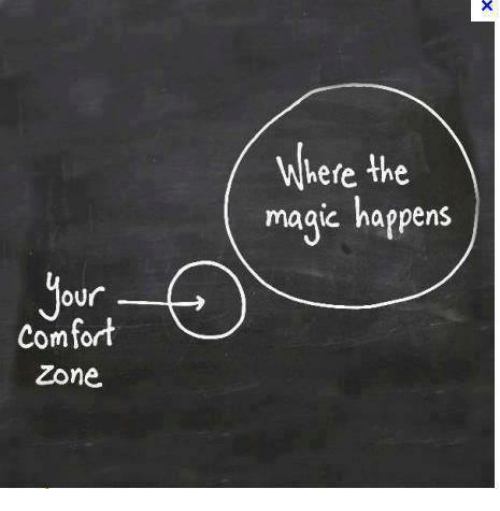
Everyone of these people, every Trevor Noah or Oprah Winfrey have the attitude of not accepting the labels that others put upon them. They refused to accept and self define their circumstances. They moved out of their comfort zone to try something different. They put themselves ‘out there’, took a risk and followed their dreams. If that didn’t work, they redefined who they were, tried another path and poured energy into moving forward. If it’s possible for just one person to do this, then it is possible for everyone to make that change.

Is it difficult? Yes. There are hardships and sacrifices that you make in order to redefine yourself. Sometimes you have to leave behind family and friends. Sometimes it’s risking economic security. I believe that everyone has dreams in life, but not everyone believes in themselves enough to pursue them or to risk failing. In order to be successful at anything, you only have to get up one more time than you are knocked down.

“Whether you think you can or you can’t, you’re right.” Henry Ford

When I came into recovery I had some very limiting labels of who I was: a loser, unlovable, hopeless cause, a jerk, a failure at life. Each one of these labels was defining me. Each one limited me; if I saw myself as a loser, then I couldn’t see myself as a winner or even see myself turning things around to become one. I had cut a groove in my attitude toward life that was familiar, and comfortable. I knew I was in a hell, but it was a familiar hell: would I risk this known for something unknown that might not work out?

We all have labels that define us. We give them to ourselves and we receive them from others. Sometimes we deserve them and other times not. But we don’t have to accept them and live with them if we choose not to. I can redefine who I am. I can have an attitude of change. I can change my perspective from one of problem, to challenge. When I hit a brick wall I can sit dejectedly before it or I can build a ladder. It’s up to me and always has been. I don’t have to accept past labels. I can make new ones. And, I’m not alone.

our-comfort-zone-where-the-magic-happens-11342197

Forgiveness

There is a lot written about ‘forgiveness’ in and out of recovery literature. What exactly is it? Well, I followed the lead from my sponsor and started with a dictionary. That led me to check out the roots of the word ‘forgive’.

It came into English as a direct translation of the Latin ‘perdonare’ which meant to ‘thoroughly’ (for/per) ‘give up’ (give/donare). Forgiveness then is the act of thoroughly giving up. Modern English meanings include pardoning for an offence, renouncing anger at and abandoning a claim. Okay, English lesson over.

Forgiveness is saying that my part is over. I took offence at what happened and now I step back; I will no longer look for recompense. Rather, I will act as if what happened had never happened. It is saying that I no longer have the expectation that another person ‘owes’ me anything or can ‘fix’ what happened. It is not pretending that it never happened. I think it is releasing the pain that was caused and no longer holding onto the offence and I no long expect anything from the one who offended me.

I see forgiveness as a type of surrender. I give up. As of this moment I will stop holding onto the anger for a broken promise or an infidelity. I won’t seek revenge. I won’t ‘hold it against you’. If I am truly forgiving the other person, I will ‘give over’ what happened and I will treat you as if it never happened.

That’s a tall order. Can I really give my trust to that person without them having to ‘earn’ it back again? Can I really act as is they never broke or lost what belonged to me? Will I never bring up this incident again, even if something similar happens in the future? That is what forgiveness asks of me. I surrender the offence. I surrender the anger it caused me. I surrender any claim I have against you.

Forgiveness is a release not only for the other person. It’s a great release for me as well. Once I forgive you, I no longer hold onto the emotions that had me locked in battle. I let go of the swirling thoughts of how to exact my due. The anger and resentment are ended. I let go of the hot coal in my hand, realizing it is doing harm to me alone.

Finally, I forgive myself. If it ‘take two to tango’, then the other person is not the only one involved; I am too. I ask myself what part I played in this incident. I ask myself what lessons I have learned. I stop allowing this ‘thing’ to enslave me. I forgive myself. And I move forward. By surrendering, by ‘giving over thoroughly’, I am able to find my own freedom.

Peace