Beyond Diet and Exercise!

Over the years I have learned a lot about diet and exercise. I am, for the most part, conscious about what I eat. For the past year I have stayed away from simple carbohydrates (especially sugars in its many forms,) and gluten. It’s meant I have to forego some wonderful desserts, breads and pastas. But I have also dropped almost 15 kilos, I feel better, I have little back pain and pain in my knees and hips has all but gone. I have been going to the gym regularly as well, following a balanced program that uses free weights, exercise machines and cardio equipment to tone up my muscles. Someone commented jokingly at the beginning of the pandemic that we would come out of it as, chunks, monks, drunks or hunks. I’ve opted for the final option. No, I’m not going to be competing in any challenges or looking to participate in an Ironman competition. Nor am I trying to look like I drank at the fountain of youth; it’s a personal challenge to look the best that I can for myself, to be in the best physical condition and the best health possible for myself.

Photo by Pixabay on Pexels.com

I am not alone. There are many who extol the benefits of avoiding things that are detrimental to our bodies and all others in moderation. And there is no end to excellent information on-line with respect to improving and maintaining our physical health.

We are not just our bodies: we are also our minds. I have to ask myself, am I doing the same to build up my mind, and my thinking as I have done for my body? Do I seek out positive ‘foods’ for my mind, moderate some and avoid others? Am I making sure that I am exercising my brain by what I read, watch and listen to?

Photo by Ololade Moshood Olawale on Pexels.com

I work hard to keep a strong and healthy body. Can I say the same for my mind? Do I guard my serenity and happiness with the same fervor as I wear a seatbelt and follow driving rules? Do I guard against the negativity that abounds in my social media as well as the news media? Do I protect my mind as well as my body? Do I allow random thoughts access to my head and give them access to peace of mind?

Photo by Tracy Le Blanc on Pexels.com

For many people, the answer is an unfortunate no. Regardless of where we go, we see people ‘connected’ via their phones to social media. We have a moment of spare time and we dive into Instagram and Facebook, only to realize that an hour has gone by and we’re still scrolling the feed. Or we have the 24 hour news channel on the television playing in the background. Everywhere we are being bombarded by mostly trivial information. As I heard one person share last month, we have a device in our pockets that gives us access to all of the knowledge that humans have gained in the whole of history and we use it to look at videos of kittens.

If your body is important to you, then I suggest that you be as vigilant with your mind. It’s up to us to look after our physical health. It’s also up to us to look after our mental and emotional health. Be as discriminating about what you read and watch as you would with how you eat and exercise. I’ve discovered that I can get along just fine knowing about some of the facts that happen in the world. I don’t need to know all of the details. As much as we would like to see and read about more ‘good’ news, it’s not going to suddenly appear. We all know that breaking any of the ten commandments sells newspapers and attracts viewers. I can’t control what happens ‘out there’.

I have little control over what happens outside of my small circle of influence, and within, it’s pretty much a full-time job keeping track of my mind. Regardless of what’s happening around me, I can control what I let into my mind and how it affects my emotional state. Just because a thought comes into your head doesn’t mean you have to act on it.

I believe that we are integrated beings. I can’t focus on only one aspect of who I am, my body, and ignore my mental state. I am committed to work both my body and my mind with a steady diet of what’s good and positive, and exercising them both to keep me at my best possible condition. It’s my responsibility.

Photo by Dominika Roseclay on Pexels.com

The ‘Good Enough’ Trap

John left university with a business degree and a lot of debt. He had a dream of owning his own retail business but because of his student debt, he was unable to get a loan. So, he took a job as an account analyst at a financial institution. It was a decent paying job to begin with and John soon moved up the corporate ladder. And with each promotion came a raise in prestige and pay. As the years passed, he cleared off his student debt, married, had children, and moved from their townhouse to a comfortable suburban home with an easy commute to his job. He has the ability to buy what he and his family need, has a small amount of debt, and he and his family take amazing vacations every year.

Photo by Binyamin Mellish on Pexels.com

Yet…

John would be the first to say that he is not really happy, fulfilled or enjoying his life. He has a good life but he has a nagging feeling that there is more. He is not complaining. He’s done what society expects of him. He knows that life has treated him extremely well and he’s living the dream.

But it’s not his dream.

Life for John is good, but it’s not great. It’s not what he really imagined it 20 years ago when leaving university, nor is it a life he really wants. He’s not really happy with his life. He did what he thought he was ‘supposed’ to do and has found what he has achieved is lacking something. But he is comfortable, he has a nice family, home, income and his future will probably continue the same way.

So…

He doesn’t change a thing.

It’s easy to get caught up in the ‘good enough’ trap. Things are ‘okay’. Life is ‘fine’. The family home is ‘nice’. What possibly could make someone like John want to change? Little or nothing.

The ‘good’ keeps us from achieving the ‘great’. The mediocre prevents us from the extraordinary. The average halts an investigation of the ‘incredible’. We bury our dreams, our hopes, and our desires and settle for what we have. It should be enough, we have been told. We don’t think we should want more than what we have , nor should we think we deserve more.

Photo by Ryanniel Masucol on Pexels.com

 “The mass of men lead lives of quiet desperation.”

Henry David Thoreau

The ‘good enough’ trap keeps many of us in a life of quiet desperation. We want to fulfill our dreams. We feel the need to push ourselves further. We long for a feeling of contentment and happiness in life. But why rock the boat? Why risk what we have right now for something that is not guaranteed and could wipe out everything that we have achieved so far in my life? Is it not better to accept what life has given us and just bury those feelings of unfulfillment? We have responsibilities we feel we can not abandon. Sure we know we could accomplish so much more and live a life of our dreams, but we’re not willing to pay the price for that kind of happiness.

And that’s what often happens. The ‘good enough’ wins out over the ‘spectacular’ and the ‘extraordinary’.

Photo by cottonbro on Pexels.com

What was John’s dream business? He wanted to open a small tackle shop near a lake where his family vacationed. He wanted to help make the vacations of others more memorable by helping them to discover the joy he found in fishing and everything associated with it. He wanted a simple, small town life where he could walk down the street and know most of the people he saw. It wasn’t a huge dream. It wasn’t complicated and requiring enormous amount of money to fulfill. Perhaps he could have designed and marketed series of fishing lures, or a better type of reel. He could have passed along his love of nature to his children and shared quiet walks with his wife along the local rivers and lakes. He would have had a greater sense of completeness in his life by fulfilling his dream.

But the ‘good enough’ got in the way.

John may not have made as much money, lived in as large a house and travelled the world if he had pursued his dream. And his shop might not have been a success. He’ll never know. He hasn’t the motivation for change, for something new, for adventure in life. He figures that life’s ‘good enough’ the way it is.

Is your name John?

Becoming Extraordinary!

What makes a life extraordinary? Do you have to find a cure for cancer? End social conflict? Start a new company that will benefit millions? I suppose it depends upon who you are and what you wish to accomplish with your life. People like Richard Branson, Oprah Winnfrey or Elon Musk have made incredible changes in the world around us. Their net worth is certainly much higher than mine yet, they had the same or even less advantages in life than I have had. How are they different from me? Why am I not being driven in a Lincoln Towncar or jetting to meet friends at my private island in the Caribbean?

There’s a common thread in people who are leading extraordinary lives. They have, from an early age, declared that they ‘want something different’. They were not going to be satisfied with the status quo: theirs was going to be a different type of life than the examples around them. None of them knew where they were going to be twenty, ten or even one year down the road, but they were willing to try options that those around them didn’t or wouldn’t even consider trying.

Photo by Cade Prior on Pexels.com

From an early age extraordinary people, seek something different and are usually encouraged and supported in their efforts by someone significant in their lives, and a poor role model can motivate as much as a positive one. Most don’t possess a superior intellect, or go to the best schools. Most of them have what we would call an average life in average home with nothing to really differentiate them from their peers except for one thing: a rebel spirit.

Most of these people possess a nature that encourages them to go beyond what is expected of them. It may be a desire for more, a personal vision that goes beyond the usual opportunities that surround them. Extraordinary people are risk takers. Their rebellious souls aren’t content to follow in the shadow of parents or other role models. They want something different. They are the ones who strike out on their own and dance their own dance in life. What others think doesn’t bother them. They see many of the ‘rules of life’ as bullshit rules and refuse to follow them, and they don’t really care what others think about what they are doing. They follow the beat of their own drum and accept the inherent risks involved in this journey.

Dwyer Manufacturing

I don’t have to look far afield to see this in action, and to be honest it wasn’t until I started writing this article that I came to realize that my brother is just such a person. While I grew up being the ‘best little boy possible’, he began life a rebel. Pushing boundaries was part of his character as was pushing our parents patience to limit. They were just happy that he stayed in high school for four years even though he didn’t earn enough credits to graduate. He took to the skills that he enjoyed and continued to learn from his work experience until he had enough of working for others and struck out on his own. Today he runs a successful manufacturing business that employs eight to ten people, depending on the workload. In addition, he has a wonderful family and is eagerly awaiting the opportunity to spoil his first grandchild. He broke out of the mold of those around him and followed his own path.

Becoming extraordinary doesn’t mean that one gains fame. It is setting one’s own boundaries and rules. It is saying I want something different in life. Most of us follow the well worn paths in life and don’t venture too far from the norms of conventionality. For others though, this is not enough. They say to themselves things like: I will do things in my own way; I will try new things and keep on moving myself forward; if I screw up, then I learn from it and try something else. And there is no guarantee that being extraordinary will ensure success as defined by most: monetary wealth. However, their wealth comes in a plethora of incredible life experiences, great relationships and an enjoyment of life. They don’t ‘retire’ but continually move forward to savour whatever life puts before them right until the end.

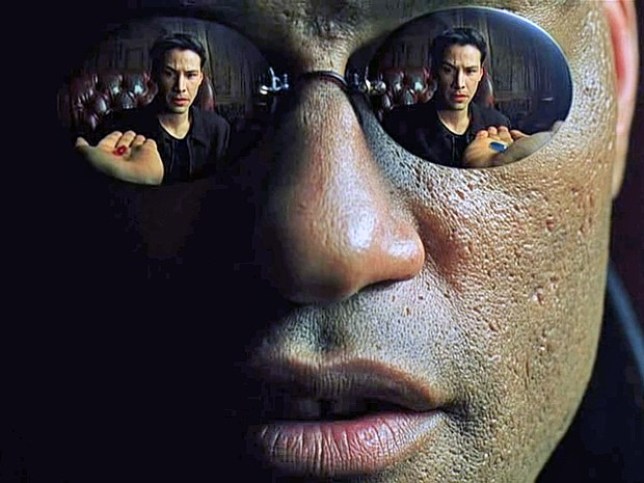
The Matrix

Extraordinary people don’t opt for the blue pill and go along following the rules. No, they take the red pill and open themselves up to possibilities. This doesn’t mean that only the rebel can be extraordinary. We all have that within us, but I think it takes more of an effort to learn to live a life with more risk, trials and change. For some of us it takes becoming so miserably uncomfortable in our ‘comfort zone’ that we have to make changes. I think for the rebel, it the excitement of the risk and the challenge; the carrot, if you will. For the rest of us it is often the stick: being so beaten up by the present situation that a move to unfamiliar situations becomes a better option. In the end, the choice to be extraordinary is up to me.