I AM ENOUGH!

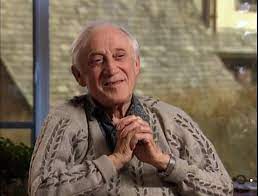
Morrie Schwartz

I think a lot of people beat up on themselves, punish themselves emotionally because they’re “not good enough” or they haven’t done enough. They berate themselves for not living up to their own or somebody else’s expectations or for not having taken a different route in life or for not getting better grades in school or a better job . . . . Once you get into that state of mind, you continue to be mean to yourself and hurt yourself in ways you may not even be aware of. It’s very important to be kind and loving to yourself. You’re the only self you’ve got, so to speak. Befriend yourself in the same way you feel compassionate and gentle with other people. If you practice the principles of grieving, accepting, and forgiving yourself, you will be making a start in that direction. Morrie Schwartz

Photo by meo on Pexels.com

It is so easy to find fault with ourselves. Many of us have a PhD in Self Incrimination and Degradation. We could’ve, should’ve and would’ve ourselves into self hatred and loathing. And in so doing, we mark ourselves as losers in the game of life. This sense of not being good enough can affect us mentally, spiritually and even physically. In the same way that emotional stress and worry can cause ulcers, medicine can now demonstrate that there is a direct connection between how we think about ourselves and our overall physical health. Auto-immune diseases, heart disease, and even cancers have been shown to have a psychological component. And once we let ourselves slide into the abyss of self-deprecation, the challenge to rise out of it is formidable.

I’ve heard from a young age that ‘to err is human.’ and it’s true. I cannot be right 100% of the time. It’s impossible. There’s no way that I can know all of the variables that create perfection. It’s important to give yourself a break. You can’t do it all and you can’t win every time; you really are only human. One my favourite definitions of success reminds me I only need pick myself up off the ground one more time than I’ve fallen in order to finish the hike. So forgive yourself. Give yourself a pass on this one, stand up and move forward.

Expectations are not results.

Every scientist tests a new theory with experiments. Sometimes the results confirm the expectations of the scientist, and sometimes they disprove the theory. I’ve learned to plan for the best outcome and at the same time keep myself aware that my expectations may not materialize. If something didn’t work out as expected, that is a reflection of the process, not on me personally. And then I can change what I’m doing because I know that the last way didn’t cut it. Would we still be in the dark if Thomas Edison stopped his light bulb experiments at 9,999 attempts?

I am enough!”

I have this written on my washroom mirror. It is a reminder that I am fine, just the way I am. I am not the work I do or the people I know. I don’t need anything else today. The mirror artistry is a powerful suggestion from Marisa Peer, a hypnotherapist from Britain. Much of her teaching is based on the truth that many people mistakenly believe that they fall short in some way or other. “I am enough” is a reminder to me that I don’t have to prove anything to anyone else or even to myself. Yes, “I am enough“, just as I am!

Photo by Matthias Groeneveld on Pexels.com

Saying it once, isn’t sufficient. We have to say it over and over to reinforce this new belief and to destroy the old tracks that say otherwise. These recorded tracks that have been in place for decades don’t rewrite themselves overnight; scratch the record enough and it can never be played again. That’s why we need the constant reminder to reinforce this new attitude because we all, despite the challenges of the day, deserve a break. And a greater sense of self-worth can do a great deal to maintain and help heal us physically, mentally and spiritually. Enough with the regrets. We can give ourselves the benefit of any doubt.

Be kind to yourself. Forgive yourself. Love yourself. You really are Enough!

What’s My Part?

How my ego likes to tell me that the things I do are justified. It’s a tit-for-tat world so if you did that to me, then I will retaliate. Of course, I’m a master at being passive aggressive, so you may not know I have ‘got you back’, but I’ll know. I’ll make you pay! You can’t do that to me! I have my pride and I will not take this sitting down!

Wow. I may not have put those words together in my head but that is the gist of what I often feel when I believe that I had been wronged. I have read in our recovery literature that whenever I am disturbed by something that happened to me, I need to look at my part in the matter and at my response to the other person involved.

I remember hearing a fellow talk at a meeting about holding a resentment for many years against a fellow in the program to whom he had lent $30,000. The man didn’t make payments, and as time went on it became apparent that he would probably never have the means to pay back the money. The fellow went on to say that he had to look at what ‘his part’ was in this situation because it was eating him up inside.  He felt anger and resentment every time he saw the other fellow. He had basically given it up as a bad investment, but he still carried a deep grudge against the fellow.  What was his part?

” I lent him the money,” he said. “I knew when I handed him the cheque that he had a history of bad debt, that his track record in business, even in sobriety was shaky, but I lent it to him anyway.” Once he saw his own part in the arrangement, he was able to let go of his resentment. He had made a big error in judgement by making the loan. He was honest enough to admit that he probably won’t ever be a good friend of this fellow again, but he could forgive the other guy and forgiven himself. And he no longer avoids him or refuses to say hello to him at meetings.

In my recovery things will happen that will disturb me, upset me, bother me. My program tells me, by using Step 10 and Step 11 to look at the situation in a way that I see the real ‘why’ I feel the way I do. For the fellow above it was a deep hit to his pride and ego to admit that he had made an mistake. I have to put pride and ego aside as well. Like the childhood saying that says when I point my finger at you there are three pointing back at me I need to shift the focus of my disturbance onto me. I am involved in every interaction with others. Admitting my part in it is a big step in my liberation from the poison of anger and resentment.


To my friends who follow my blog: www.recoveryriver.org A couple of months ago Facebook changed its policy and the blog doesn’t automatically post to Facebook anymore. I invite you to click on the “Follow” button. That way you will receive an email with every one of the blog posts.

Thank you.

Free of Regret

It’s not easy to live life without regrets. It’s much easier to wonder sometimes about the “what ifs” and “if onlys”. Regret is a sadness or disappointment over what happened or didn’t happen in the past. “What might have been?” I can ask myself. “I could have been a better son, friend, husband, father and coworker. I might have made so much more with my life.” If we don’t stop the internal conversation it can lead to the vicious spiral of depression, more regret and relapse.

“The best time to plant a tree was 30 years ago. The second best time to plant one is today.”

The gift of the Serenity Prayer is acceptance of what we cannot change. One of those things is the past. I know that my life would be very different today had I taken another road in the past. I was in a relationship that wasn’t working and hadn’t been working for a lot of years. I knew it, but I lacked the courage and strength to leave. In the end, I was the one who was left behind. I can’t take back those years. I can’t go back in time and change them. So what do I do so as not to live in regret?

I have to accept what happened. I accept that my Higher Power was looking after me during that time and continues to do so. I accept that I had challenges to overcome and some lessons to learn. It’s not easy to learn to forgive oneself for roads not taken but I must. Steps four through nine help us to work through regret. So yes, things did or didn’t happen in the past and today I don’t have to regret those things. Rather I can use them as teaching tools for the present. I prefer to look at all that happened in the past was needed to bring me to who I am today. And I know that what happens today will lead me on to who I am to be tomorrow. I’m learning to trust the process of the program and my Higher Power. Today can I plant that tree I didn’t in the past without guilt, without remorse and without regret.

It’s important for me to remember that: “We will not regret the past or wish to shut the door on it,” is a Ninth Step promise. I have to work all the steps that come before. There aren’t short cuts. Living the steps isn’t all that difficult but it does take persistence. I don’t get a vacation from being in recovery. I live in recovery 24 hours a day. So today I will plant a tree. It may be a while before it bears fruit, but an unplanted tree never will. Trust the process. It works when you work it!