Discovering Happiness

If the road to hell is paved with good intentions, then the highway to heaven is littered with suicide, addiction, anxiety and fear. Why is it so hard for us to find our heaven, nirvana, happiness, and serenity? Why do so many people fall by the wayside while trying so hard to find it?

“The search for happiness is one of the chief sources of unhappiness.”

Eric Hoffer

We don’t find heaven, we don’t find nirvana, we don’t find happiness or serenity. They are not places that we can travel to, nor destinations or goals. How many of us seek a goal with the idea that happiness will come at a certain moment in the future. When I graduate I will be happy.’ ‘When I find the love of my life, I will be happy.’ ‘When I get the promotion, I will be happy.’ We look forward to a magical, mystical moment when, I don’t know, we think that the sky will open up and the bluebird of happiness will land on our shoulder. But that doesn’t happen. We graduate, get married and get the promotion and we do feel momentary happiness but then, it’s fleeting pause is over and we work for the next moment of happiness.

Photo by monicore on Pexels.com

There is also, of course, the obverse. Not everyone graduates, finds their soul mate or ever gets more than an entry level job. Are we living in a society where people will never attain a true feeling of Heaven on Earth? Is the seeking of that feeling of happiness the source of our own despair? When we reach a goal, we do feel that momentary jolt of ‘Yes, I did it’, which fades quickly. Like the wonder of Christmas fading before the week is out, we push toward the next ephemeral moment.

Perhaps our challenge is not to seek happiness. Perhaps what we need to do is to define what actually causes us to feel the emotion of happiness? What would give you not a momentary but a continued sense of wellbeing, contentment and serenity? Few people can answer that question. Sure, they can tell us that a party makes them happy, or a wedding or a birth; events and goals. They can tell us that being with other people and making them happy leads to happiness, but even this is an interim fix; what if they can’t make others happy? I don’t think happiness is a temporary state of excited emotional bliss, a goal or destination. Then what is it?
Photo by Gautham Krishnan on Pexels.com

Happiness is not something that we can seek. It is not something that we can do. We can’t pursue it. We can’t buy it. We can’t attain it. Nothing ‘makes’ us happy.

Happiness comes from within. I think that discovering our own happiness is the true purpose in life and our true measure of success. The recipe for happiness varies from person to person. It results from our choice to live a life that is congruent with one’s principles and beliefs. People who are happy focus on the people that they care about, the things that they value, a conducive environment and activities they enjoy. It requires self-discipline and effort to create it and maintain it within oneself. I don’t find happiness when I get my diploma or promotion; I feel it as a result of doing what I need to do to achieve those goals. I don’t find happiness when I make a certain amount of money or win the lottery; I experience happiness knowing that I am being true to myself and my the things that are important to me. I don’t find happiness by trying to control all of the variable that have a part in my life; I find it by focusing only on those things I have control over, and those things are within me. My attitude, my judgement, my actions, my choices and my perspective are all within my circle of control.
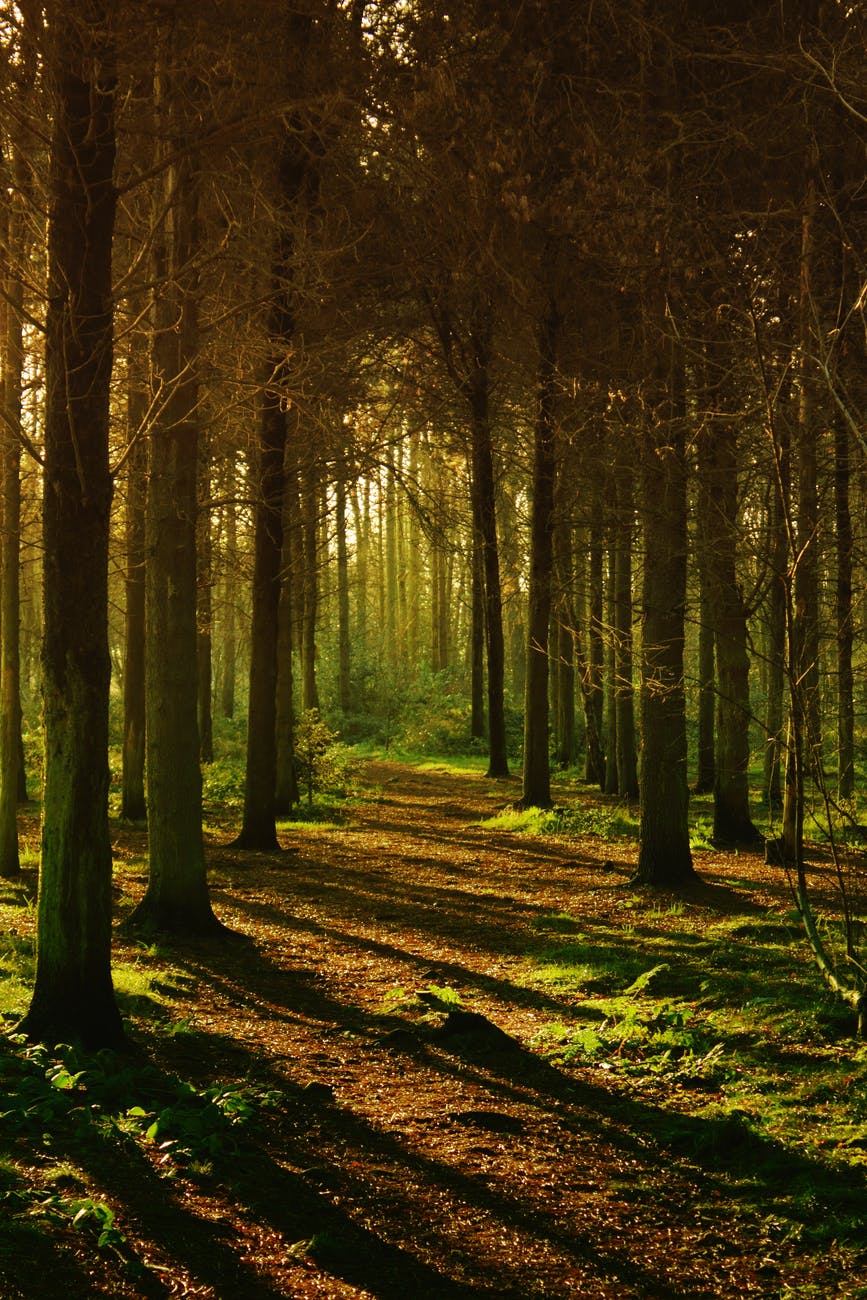
Photo by Anthony on Pexels.com

Happiness is within my control as well, it follows. If I feel happiness, perhaps I can analyze why at this particular moment I feel it. I can pay attention to those things that result in feeling unhappy and maintain my distance in the future. If I know that I feel happiness when I take a walk by the ocean or through the woods, then why not do that more often? If sharing a deep conversation with a friend invigorates me and brings a smile to my face, then I should seek out times to have those conversations. I have to do the work. My answers won’t magically appear. But with time and practice I can make the right choices for me and my happiness.

Finding Nirvana, Shangri-La, or Heaven, as well as their opposites is a very Earthly proposition. Despite of all I do, I will sometimes feel fear, anxiety and suffering. But I don’t have to stay in that misery any longer than I wish to. I have a choice. I choose to be happy.


The ‘Good Enough’ Trap

John left university with a business degree and a lot of debt. He had a dream of owning his own retail business but because of his student debt, he was unable to get a loan. So, he took a job as an account analyst at a financial institution. It was a decent paying job to begin with and John soon moved up the corporate ladder. And with each promotion came a raise in prestige and pay. As the years passed, he cleared off his student debt, married, had children, and moved from their townhouse to a comfortable suburban home with an easy commute to his job. He has the ability to buy what he and his family need, has a small amount of debt, and he and his family take amazing vacations every year.

Photo by Binyamin Mellish on Pexels.com

Yet…

John would be the first to say that he is not really happy, fulfilled or enjoying his life. He has a good life but he has a nagging feeling that there is more. He is not complaining. He’s done what society expects of him. He knows that life has treated him extremely well and he’s living the dream.

But it’s not his dream.

Life for John is good, but it’s not great. It’s not what he really imagined it 20 years ago when leaving university, nor is it a life he really wants. He’s not really happy with his life. He did what he thought he was ‘supposed’ to do and has found what he has achieved is lacking something. But he is comfortable, he has a nice family, home, income and his future will probably continue the same way.

So…

He doesn’t change a thing.

It’s easy to get caught up in the ‘good enough’ trap. Things are ‘okay’. Life is ‘fine’. The family home is ‘nice’. What possibly could make someone like John want to change? Little or nothing.

The ‘good’ keeps us from achieving the ‘great’. The mediocre prevents us from the extraordinary. The average halts an investigation of the ‘incredible’. We bury our dreams, our hopes, and our desires and settle for what we have. It should be enough, we have been told. We don’t think we should want more than what we have , nor should we think we deserve more.

Photo by Ryanniel Masucol on Pexels.com

 “The mass of men lead lives of quiet desperation.”

Henry David Thoreau

The ‘good enough’ trap keeps many of us in a life of quiet desperation. We want to fulfill our dreams. We feel the need to push ourselves further. We long for a feeling of contentment and happiness in life. But why rock the boat? Why risk what we have right now for something that is not guaranteed and could wipe out everything that we have achieved so far in my life? Is it not better to accept what life has given us and just bury those feelings of unfulfillment? We have responsibilities we feel we can not abandon. Sure we know we could accomplish so much more and live a life of our dreams, but we’re not willing to pay the price for that kind of happiness.

And that’s what often happens. The ‘good enough’ wins out over the ‘spectacular’ and the ‘extraordinary’.

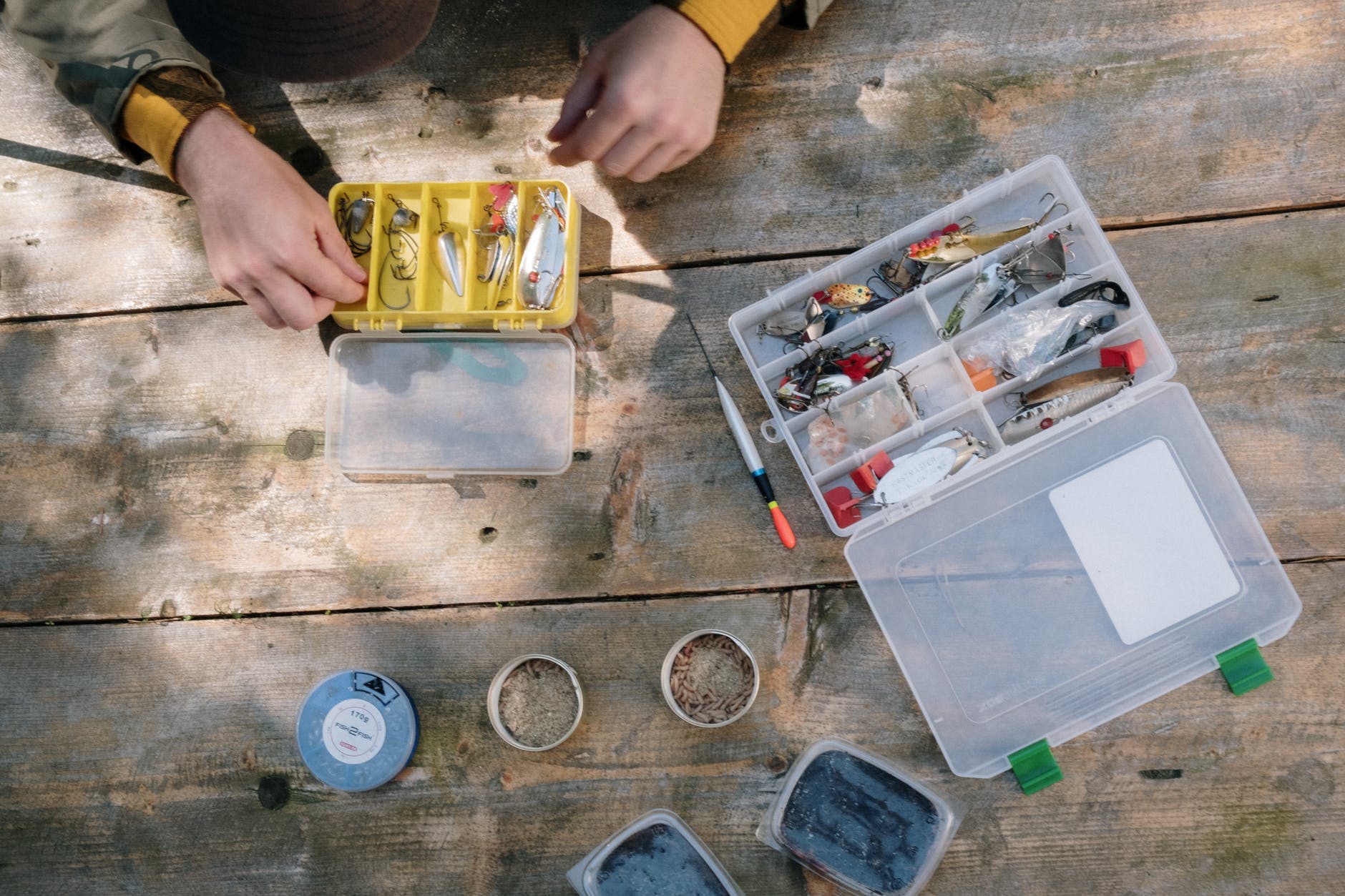
Photo by cottonbro on Pexels.com

What was John’s dream business? He wanted to open a small tackle shop near a lake where his family vacationed. He wanted to help make the vacations of others more memorable by helping them to discover the joy he found in fishing and everything associated with it. He wanted a simple, small town life where he could walk down the street and know most of the people he saw. It wasn’t a huge dream. It wasn’t complicated and requiring enormous amount of money to fulfill. Perhaps he could have designed and marketed series of fishing lures, or a better type of reel. He could have passed along his love of nature to his children and shared quiet walks with his wife along the local rivers and lakes. He would have had a greater sense of completeness in his life by fulfilling his dream.

But the ‘good enough’ got in the way.

John may not have made as much money, lived in as large a house and travelled the world if he had pursued his dream. And his shop might not have been a success. He’ll never know. He hasn’t the motivation for change, for something new, for adventure in life. He figures that life’s ‘good enough’ the way it is.

Is your name John?

A New Pathway

As a single footstep will not make a path on the earth, so a single thought will not make a pathway in the mind . To make a deep physical path, we walk again and again. To make a deep mental path, we must think over and over the kind of thoughts we wish to dominate our lives. ~Henry David Thoreau

Mental and spiritual changes that are real, that are deep and that are lasting cannot be accomplished by a single action. The ruts of my past pathways are carved deeply in my soul. How I felt about myself while growing up, how I relate to the people around me and how I connect with higher consciousness have all created hardened ways of approaching life. And just like it takes an effort to get the wheel of a cart out of the rut caused by years and years of running along the same path, making a change in how I think and act as a result of consistent ways of thinking for many years, requires great effort. Even after years of trying to remove my father’s too often repeated admonition directed at me that I was ‘as useless as tits on a boar’, I still feel its sting.

Photo by Nathan Cowley on Pexels.com

It comes at me during moments of my own weakness or when I feel like I am failing at something. It comes when I am in frustration because something is not going the way that I had intended it to go. My self esteem starts to waver, I remember that statement, and I fall further into my emotional state. I feel that I will never amount to much in life. I feel inferior to those around me. I doubt my abilities and my talents and my propensity for learning. I begin to believe that he was right, that I have no purpose in life. In my later teen years I rebelled against his frustrating cry by repelling anger with anger, telling him to fuck off and do it himself and leaving the scene. But the many repetitions of this statement by my father had already began to wear a deep rut indeed into my psyche. Alone and by myself I would use the same statement as self recrimination for an error or failure.

In the past years since I became aware of the impact of this statement on my life, now 25 years since my father’s death, I have battled with this statement. I have meditated on it. I’ve told myself that it isn’t true and listed my many accomplishments in life and challenges overcome. I have been in therapy, taken medication and symbolically thrown a rock with this statement written on it over the side of a cliff. And every once in a while, when I start to feel a bit down, it comes back to haunt me: ‘you’re as useless as tits on a boar’.

On an intellectual level I know that it isn’t true. I have disavowed the statement and I can enumerate many life accomplishments. And it is still there, lurking in a hidden nook of my brain waiting to jump out at an appropriate time to drag me back toward the abyss of depression and self loathing.

Photo by Pedro Figueras on Pexels.com

Lately I have been examining it more closely. I have started to look at it from my father’s point of view. Now for the most part, we had a good relationship. But it wasn’t always easy. I was his first born son and like any father, he probably had his own hopes and dreams for me and my successes in life. He probably thought about me taking over the family farm. He may have wondered who I might marry and what his grandchildren might be like. However, I also think that by the time I reached my teens, we were both coming to realize that I might be gay.

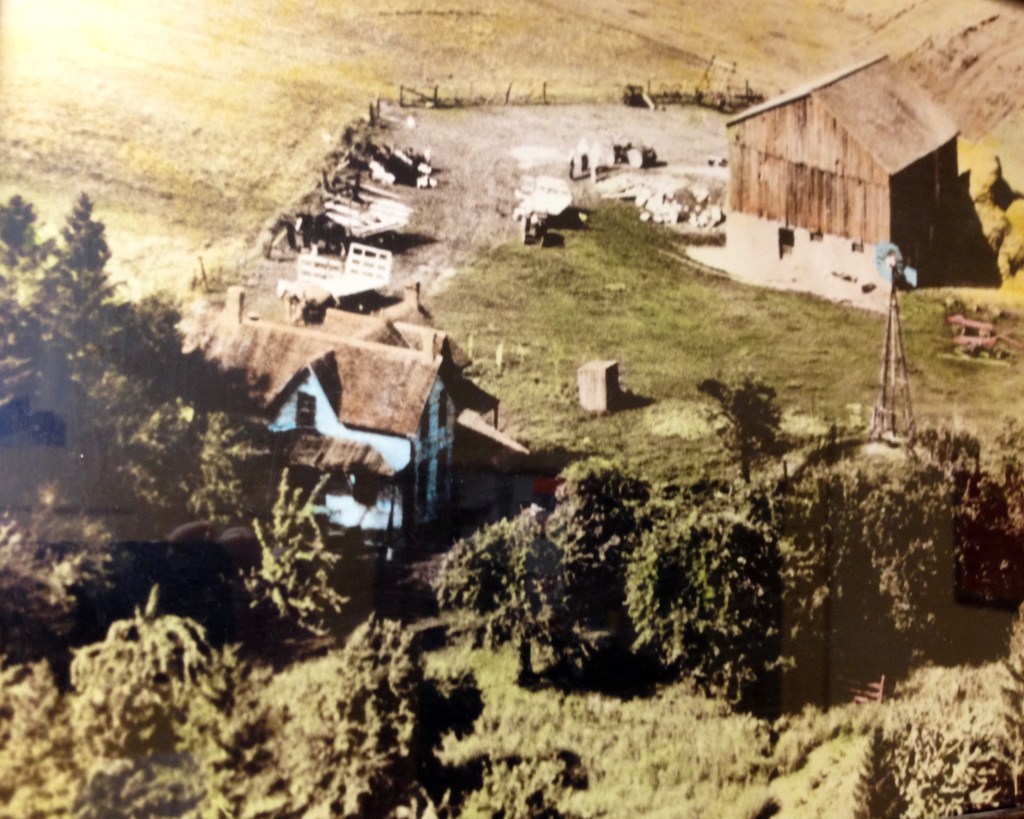
I have looked at my father’s own readiness to be a parent and realized that he had his own challenges while growing up. His father was 55 years old when dad was born. As soon as he could lift a shovel, I am sure he was helping his older brothers and father in planting and harvesting of crops, tending to and milking the cows and butchering chickens that provided Sunday dinners. His father was more like an aging patriarchal figure, or a grandfather than he was a dad. And of the stories I’ve heard, he had infirmities that prevented him from being much of an active member of the farm work force as he aged. My father, fairly quick at school, passed his high school entrance exam just after he turned 14; he left school without finishing the year and pretty much took over the farming duties from his ailing father as his older brothers were now working at jobs away from home. Seven years later, his father died.

Dwyer Farm (circa 1944)

Looking at this past, I can understand how his youth did not prepare him to become the father he might have become. He had plenty of anger issues and seem to relish letting go a stream of words that would make Red-Beard blush and let every neighbour within earshot to know that I had screwed up royally again. Anger was the only strong emotion I saw him express growing up. Fortunately, I remember little physical punishment; the verbal chastisement was enough. And, as he aged, he mellowed. He became a more pleasant person to be around. We never developed a deep relationship. We never discussed feelings or our past mistakes. We never talked about my relationship with my partner or anything touching upon sexuality. In the only ‘talk’ we had had about sex, just before the subject was presented back when I was in grade eight. He told me that as humans we didn’t go around the neighbourhood like a dog looking for a bitch in heat. Sexuality was not talked about. Feelings were not talked about. Within the family, anything to do with an even slightly taboo subject was mentioned in whispers as if the soft speak wouldn’t attract a fouler curse. Nevertheless, I appreciated what my father had done for me, his personal sacrifices for the good of his family. And could appreciate that he too was growing in understanding of himself. We both did the best we could in our relationship, given its challenges.

Photo by Juan Pablo Serrano Arenas on Pexels.com

I understand this all. I get that it was a different time. And I understand that he was doing the best that he could under the circumstances of his own upbringing and beliefs. I see that much of his anger was really misdirected frustration at his situation in life and his inability to express himself. It doesn’t make it easier for me when I am reliving the past, but it does make it forgivable. I have a better understanding of how he got to that point in his life. And I would like to believe that if I had arrived at the point in my life before he died that I needed to talk with him about it, he would have reacted well and listened to what I had to say. Unfortunately, that didn’t happen.

That doesn’t mean that this work I am doing on myself is finished. I still have to go back and fill in this and the other ruts of pain and hurt that were created early in life. I have to work on forgiving my father regularly. And I can work at changing my focus. I can focus on the good times that I had with him. I cherish the long hours I spent with him at the hospital as he lay dying; few words needed to be said then. And I will be forever grateful that I was able to spend his last night on this Earth at his bedside. With him, as a human, I have made my peace. With his words, it is still a struggle to overcome their power. But slowly, with constant work and the passage of time, I am moving beyond that perspective of my past and I am creating a new narrative of who I have become and who I will be tomorrow. Grass is growing again over the old pathway. Like an old scar, I can still see where the wound was inflicted if I squint a bit, but it is losing its hold upon me. I am working on digging in new thoughts to dominate my life, creating my own pathway in how I think about myself.

Photo by Bas Masseus on Pexels.com