Terminally Unique

I, like many others who arrive at the doors of recovery rooms, was suffering from a belief that went far beyond my addiction and was at the root of what was killing me. It was a belief that went deep and in many ways was the source of all of the problems that I was encountering in life. I arrived with the disease of ‘Terminal Uniqueness’.

I thought that I was unique. I believed that I was different. I knew that no one else had the challenges that I faced. I was convinced that if anyone else had been bombarded by the set of circumstances that I found myself in, they too would have found a way to escape this prison by over indulging in some sort of ‘medication’ to treat this disease.

Of course I ended up in recovery. I was sure I was the only white, gay, ex-catholic, male, farm boy from Southern Ontario that had ever been born. I had some lower back pain issues. I had a partner who didn’t understand me. I was depressed. I felt I was powerless over my situation and so, of course, I deserved some compensation for all of these difficulties. Getting loaded was my way of dealing with all of those things. I needed some relief from all of the things that were constantly prodding at my mind.

It took going through the Twelve Steps of recovery to allow me to see that I wasn’t ‘unique’ or ‘different’. I came to see that my ‘terminal uniqueness’ was another deadly form of Ego disease. I realized that I hadn’t accepted the package that made me who I was. Thinking I was different was my ego telling me to run away from all that I was instead of embracing it. My problems weren’t connected to my sexuality, my religion, or my environment. My problem was me and my solution was acceptance.

Recovery has helped me to face myself honestly, without judgement and without expectation. I have a garden variety addiction. My story is very similar to the stories of the other folks around the meeting tables. Some dove deeper into their addiction than I did but the result was the same and here we all sit. I learned to dig below the surface to see my past for what it was.  I learned to accept my story, my past. I learned to embrace the person I was discovering, perhaps for the first time.

Today I focus on gratitude. I am learning to be grateful that I have all of those qualities that I had been running away from. I have come to understand that I can’t change my past or those qualities, nor to I want to. They are part of my make-up and they are something to celebrate rather than escape from. My ego is a bit tamer these days. Oh, I still fall into the trap of thinking that I can’t make it through whatever I am going through. But, I have survived every challenge that has ever come my way. How do I know? I am still here.

I have learned that accepting what happens as ‘life’, makes it neither positive or negative. I live my life on life’s terms, not mine and that allows me to remember that I can and will make it through.

And for that I am eternally grateful.

man sitting on edge facing sunset

Photo by Abhiram Prakash on Pexels.com

The Spiritual Angle: Making Connections

Today’s reading from Daily Reflections of AA literature (Feb. 9) talks about the ‘spiritual angle’ of the recovery program and how many people find this to be one of the most difficult parts of the program to accept and integrate into their lives. For many the term ‘spiritual’ is synonymous with God and religion and brings with it a whole basket full of snakes.  A basket they’d rather keep well sealed. I know that the preconceived ideas I had about the program and religion kept me out of the rooms for several years because I thought that recovery would turn me into a bible thumping fool. And yet I finally came, despite my misgivings, because I couldn’t do it on my own.

And that’s really the key to the ‘spiritual angle’: I couldn’t do it on my own. In my disease I had dug my hole so deep that I had isolated myself from everyone and everything. Now here I was in a recovery meeting surrounded by others who could relate to me, and, more importantly, I found I could relate to them. I was impressed that these people seemed happy. I heard laughter. I was invited back. In a few days I knew I had found my tribe and that my preconceptions had been incorrect.

Slowly I started making connections. First to the others at the meeting. Then I started connecting to myself. I fount that I could actually get through a day without altering my personality. I didn’t know it then, but I still had a long way to go. And I learned a new trick, or so I thought of it that way: one day at a time. Every day at the meetings I was deepening my connection to others, to the program and to myself.

In that process I started to develop my spirituality, which I believe is, stated simply, making connections. I was seeing first, that I wasn’t alone. Then I started seeing that it wasn’t all about me. I started being less selfish with my time and my talents. I started listening. Not only was I learning that I couldn’t do it all by myself, I was also learning that I didn’t have to, nor was there ever a ‘rule’ that I had to do it alone.

The connections to myself and to other people then broadened my mind to realize that we are all connected in a manner much deeper than a ‘hello, how are you?’ kind of way. I had a renewed sense of being a part of something. I was breaking out of my isolation, breaking out of my ego and entering into the ‘realm of the spirit’ as it is sometimes called. For me, it is the ‘realm of connections’ where I am no longer alone.

I see myself today as connected to myself in that I take responsibility for my actions, realizing that I’m the only one I can control. I am connected to others: not just the folks in the recovery rooms but also with my family, people I work with and interact with everyday. And I believe that I have a connection to everything. There is something greater at work here. Something I still can’t put my finger on but which connects me to everything else.

That is my understanding of the ‘spiritual angle’ of the Twelve Step program of recovery. I have connections I didn’t have before. It doesn’t matter what I call it or how I understand it. I just have to recognize that it exists.

I am more than self and selfishness: I am connected.

pexels-photo-164531.jpeg

Photo by Pixabay on Pexels.com

Acceptance is the Starting Point

In my addiction I would often scold myself and tell myself when I came to in the morning that I wouldn’t do that ever again. But by noon, all bets were off; my head was clearer(?) and I could tell myself with just enough conviction that it wasn’t that bad and I would do better today. Of course, during the last few months of active addiction, there was no morning regret. I had no dignity. I had little emotion. I had but one goal: the continual desire to seek and find oblivion.

I knew before I arrived at my first recovery meeting that I needed help. I just couldn’t stop on my own any more. I figured that if I could use the meeting to keep my head on straight for one day, then perhaps I could quit for longer. I thought that I just needed that push to get me up onto the ‘wagon’ and I would be able to handle it by myself.  After all I had quit on my own in the past for fairly long periods of time. I could lick this on my own.

A member of the group invited me to return to the meeting the next day and since I wasn’t doing much of anything and perhaps because no one really wanted me around any way, I took her up on the offer. And I kept going back. I started reading Twelve Step literature. I started counting my clean and sober days. Time in the program because important to me. I always chased the gold star in school; now I was chasing the 30-day chip, then two month and so on. I stayed. I began to work the steps and my life began to change.

Why did this work for me? I think that when I came into the program I was finally ready to accept that I was powerless and that I needed help. I was ready to surrender. My acceptance of the situation that I found myself in (and which I know was of my own making) became the jumping off point into recovery. The evidence of my addiction was before me. I could no longer deny it. I couldn’t pass it off as a bad night or a difficult week. There just wasn’t an end to what I was going through. Once any of us decide that we have hit our bottom, then we can start moving forward again.

I’ve learned since I’ve been in Recovery that what I resist will persist. As long as I was resisting my disease, fighting it, not acknowledging it, I was giving it the upper hand. The heroin addict, the compulsive gambler or the two liter a day alcoholic are doing the same thing: fighting against the facts, denying that they have a disease which keeps them in their addiction. Admission and acceptance are the foundation of  recovery. Once I accept, I’m saying to myself that there’s nowhere else to go. I have to deal with the situation or it is not going to change. Acceptance of the situation made me willing to do the work to move forward.

And I am learning that this applies to all situations in life. Once I accept a that I cannot control persons, places or things, then I can work on the one thing that I can control: ME.

I am grateful.

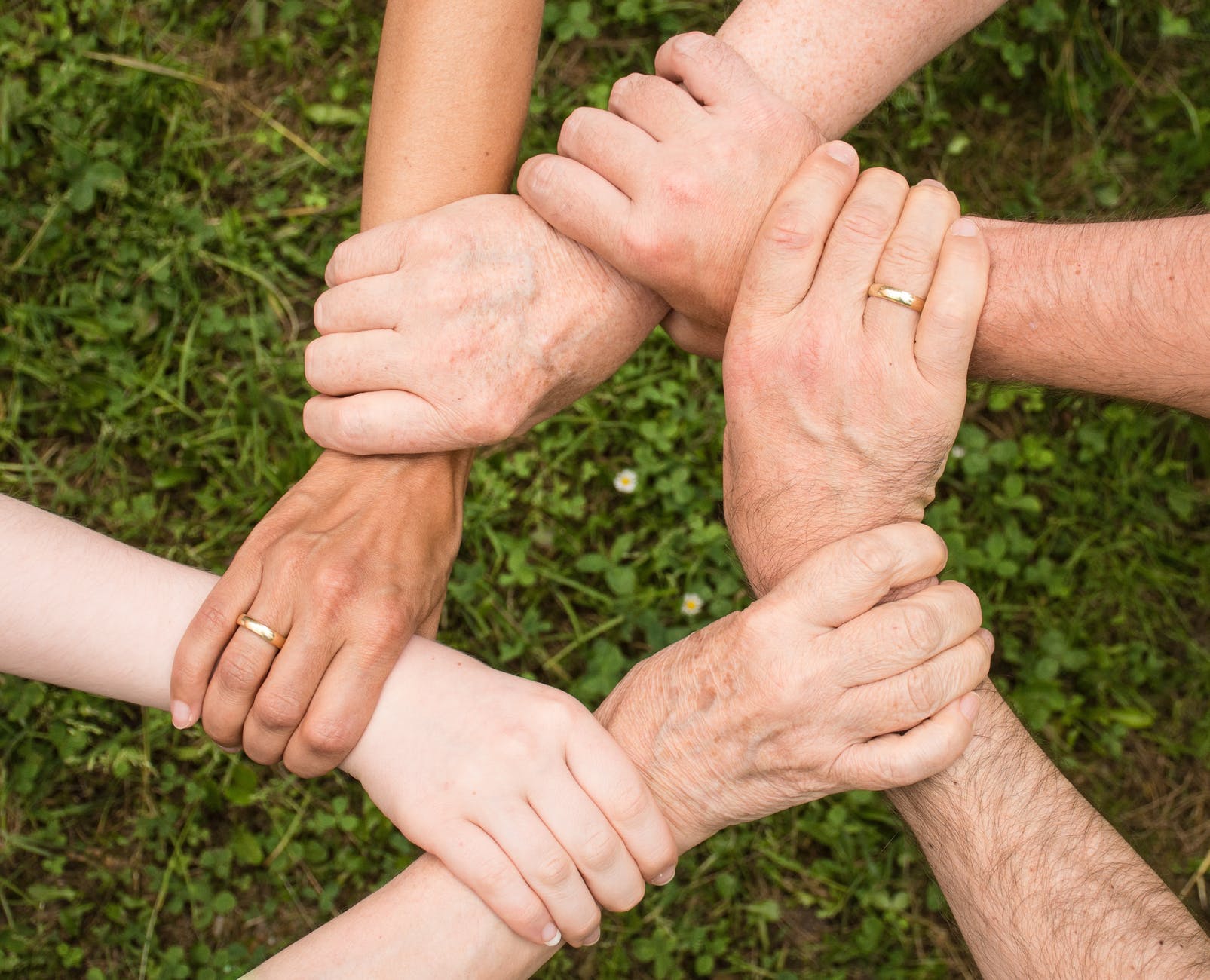
ground group growth hands

Photo by Pixabay on Pexels.com