Enlightened Acceptance

I have read many books and articles on enlightenment. And there are so many ideas as to what ‘enlightenment’ really means and how to get there. For some it is achieving a sense of Nirvana or having some sort of ‘mystical’ experience. Some see it as achieving ‘persistent non-duality’ where we are ‘one’ with everything and the self, or ego, is subsumed by the spiritual. Teachers suggest that it’s achieved by certain methods of meditation, or yoga, or chanting. Others say that we need to dig deep into ourselves and remove all that is untrue until we arrive at truth. Every guru, every religion seems to have a unique way to attain enlightenment, often at the expense of the teachings and practices of others.

Enlightenment: The Age of Reason

In looking at the word itself, ‘enlightenment’ I believe that it is a lot simpler than much of the information I have consumed over the years. It simply means allowing more light onto a subject. History refers to the 17th century as the Enlightenment because of it’s focus away from the magical thinking and onto the intellectual practices to arrive at truth which swept away the cobwebs of the middle ages. The latter part of the 20th century began an new enlightenment in a return to the spiritual aspects of our lives, turning away from the material excesses. Eastern mysticism and spirituality came to the west, and Western beliefs in democracy and economics moved east. A movement of the pendulum back to the centre.

If I could define enlightenment briefly I would say it is “the quiet acceptance of what is.”

Wayne Dyer

I really like Wayne Dyer’s definition of enlightenment. And I think it is what we are all called to be: human adults who quietly accept the who, what, when, where, why and how of the present situation. It’s not pretending to be someone from our past or anticipating who I might become in the future. It is being in the present, using the power of this moment to find peace and know that at one’s core being all well and there is serenity. It means that I have ‘light’ in my life. It also means that I can change to allow even more light into my life.

Dyer used the same definition for enlightenment as I use for the word ‘humility’: the quiet acceptance of what is.

Are humility and enlightenment the same thing then? Quite possibly.

We often mistakenly equate humility with humiliation. They are not the same. Humility is a state of being, a character trait if you will. Humiliation is an emotion, an abasement of our pride. Humility is a character trait that I seek to cultivate in myself. And, if I truly know and accept where I am in life, nothing can humiliate me. If I really know myself, then I am solid upon the ground. I accept where I am in life.

However, Enlightenment, Humility and Acceptance do not demand that we must stay where and how we are in life. In fact, I think it is a challenge to improve. When I know how little I know, I am challenged to find out more. If I see that my lifestyle is not providing the health that I want in life, I am challenged to make changes in what I eat and how I exercise. If my financial situation is below where I would like it to be, I can alter my earning and spending beliefs. But I can’t make any of these changes if I don’t first ‘know’ how things stand at the present moment in time. The proverbial ‘light bulb’ comes on and we see exactly where we stand. We become ‘enlightened’.

That is why Enlightenment is the acceptance of how things are. It is the first step on a new journey to greater knowledge, greater understanding and infinite wisdom. It is a journey that I can work at every day and is, therefore, not a state of being or a moment in time. I became enlightened when I realized that teaching at an elementary school was not how I wanted to spend the rest of my working life. I became enlightened when I started a small business and grew it from the ground up. I became enlightened when I ended a relationship that was no longer nurturing to either of us. I look at my sobriety as a gift of enlightenment. And I can be enlightened by the little things in life too, like walks with the dogs, a sharing of like minds, or a new experience. All of these contribute to my own enlightenment journey; they add a bit more ‘light’ of knowledge, understanding and experience to where I am standing today.

Enlightenment is a process that takes time and patience as well as humility. It is part of my ongoing journey of becoming just a little bit better version of myself today than I was yesterday and for that, I am grateful.

Meditation…

I have tried meditation various times over the years and just couldn’t seem to get the knack of it. You see, I cannot fold myself into the lotus position, at least not without breaking at least one leg. And sitting cross-legged is also very difficult for me, especially after more that just a couple of minutes. So I figured if my body wasn’t designed to do meditation. I know this was just an excuse but I never really gave it much of a serious thought or any sort of a concerted effort.

There are many methods of meditation. As a teenager, I remember that Transcendental Meditation (TM) was big. Everyone who was anyone was taking the course and learning their mantras. For most North Americans, it was the first time Eastern philosophy was ever discussed and practiced. Later, other practices of meditation were sought out and taught. Some meditate by focusing on their breathing. Others focus on an object, or use prayer beads to quiet their minds. I like Eastern spirituality and I understand the appeal of Buddhism and its teachings. But the Buddhas, the gongs, the incense, its prayer wheels and flags, could not keep me in a practice of meditation. And yet, I knew that I wanted it, and probably needed it!

Why do people meditate? It relaxes the body and mind, thereby reducing the negative stress and anxiety that we experience. As well, scientific research is proving that it has a physiological effect on the body. It can change our body chemistry, releasing dopamine and other ‘feel good’ molecules into our bloodstream. Creativity, attention and memory are positively influenced. You don’t have to meditate for hours on end to enjoy the benefits and they last long after the quiet time we spend. Meditation changes you: body and soul! (Forbes Magazine: 7 Ways Meditation can Actually Change the Brain.)

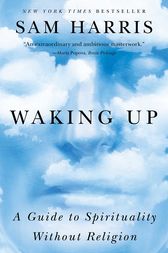
So even though I knew about all these benefits, it wasn’t until a good friend of mine introduced me to a book by Sam Harris: Waking Up: A Guide to Spirituality without Religion, that everything finally clicked into place for me. I still haven’t finished the book but I appreciate his very practical approach to spirituality and to meditation. I downloaded the meditation app and started using its guided meditations. I think it’s about ten free sessions before they ask you to pay up, but for me, it is well worth it. I finished the 50, ten minute beginner sessions and now usually use the daily meditation, between 10 and 20 minutes long.

After more than three months, meditation is part of my morning routine, along with daily writing and, of course, coffee. Do I see and feel the benefits? While I can’t say that I feel my brain cells growing and changing, I can say that I appreciate the calm, the quiet, and the peace. Some days it takes longer than others to calm the thoughts and focus on just breathing. It’s common that I find myself deep in some thought and Sam’s voice will reach out of the silence to tug me back to this moment. There are days where I become mesmerized by the dance of colours that I see behind my eyelids. Fortunately, there’s no graduation from this practice. It is a daily practice that I invite you to enjoy as much as I do.

Photo by Skitterphoto on Pexels.com

Find what type of meditation works best for you. If you want to sit cross-legged and burn incense, that’s great, but it’s not necessary. You need only find a quiet spot where you won’t be disturbed for a few moments. And you can meditate at any time of the day. Hey, if you find that you really do ‘wake up’ at the end of the session, you won’t be the first to have fallen asleep. There is no wrong way. There is only the embrace of the stillness that is within us all.

I first heard this ‘prayer’ in the Waking Up sessions. I have incorporated it into my daily practice. And it is my wish for you:

May you be happy.   
May you be free from suffering.   
May you know peace.

The Creative Journal

Writing is part of my daily ritual. I wake up at 6 am. It’s not that early here. In the tropics, the length of day doesn’t change much between the solstices, so there’s plenty of daylight year round at this hour. I set the water to boil, prepare the filter and grounds for coffee and sit out on the deck while I wait. Here I say an opening greeting to the day and enjoy the quiet for a few minutes until the water boils. I make my coffee and I sit down to my writing.

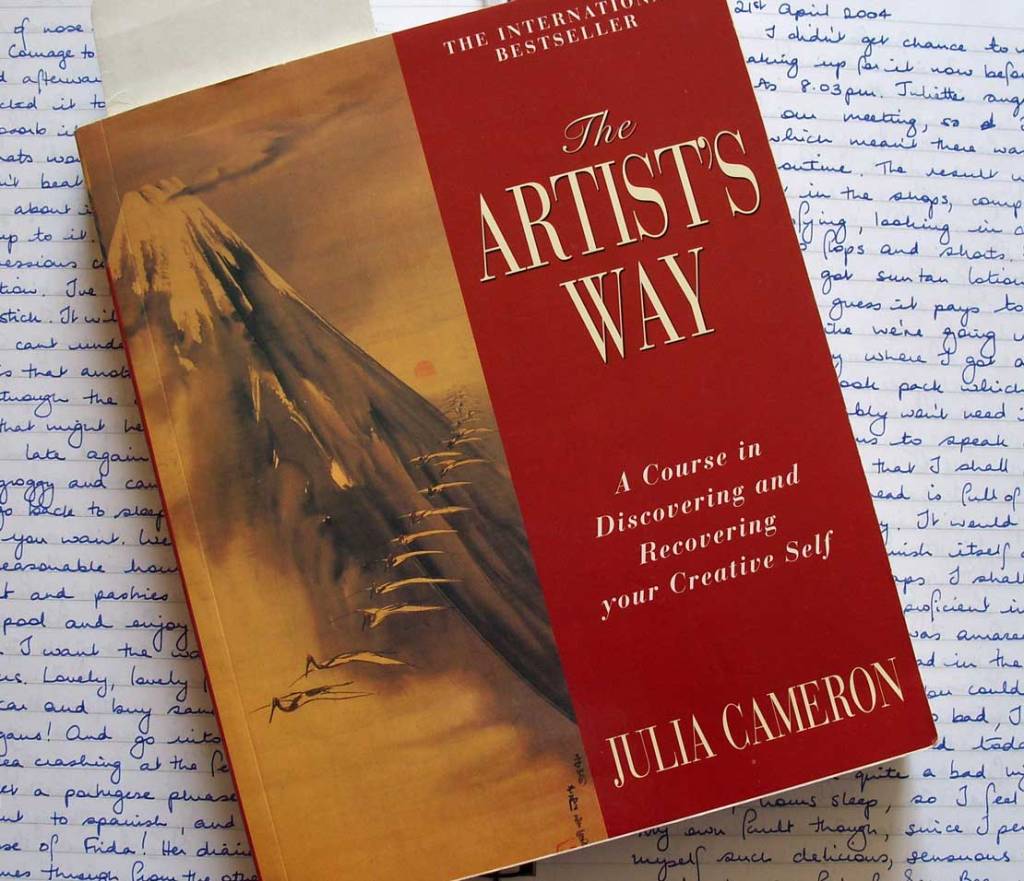
I took up writing first thing in the morning about five years ago. It began while reading a book on developing creativity: “The Artist’s Way”, by Julia Cameron. In this text, which is part course, part workbook and part inspiration, she suggests that everyone write their ‘morning papers’. Here one can jot down thoughts, ideas, plans, a description of last night’s dreams, or vent on an issue and get it all out. She suggests to the reader that writing three pages of handwritten script every day is one of the best practices to increase creativity levels.

I admit I haven’t always been faithful to the practice. Some days, there’s a change in how need to plan my morning. Other days I get immediately involved in something and I forget. Once in a while I don’t think I have time (because I turned off the alarm and suddenly it was 7:30!) And until a few months ago, I had dropped the practice completely for almost a year.

I am grateful that I was inspired to return to the daily writing. It does a number of things for me. First and foremost for me, writing sets a good tone for the day. Rather than pop into social media or the news, I pop into myself. I am present with the now. I write about what I am thinking. I write about my challenges. I write about what I love and what I hate. I write about what I would prefer for the future. Sometimes it is philosophical, sometimes spiritual and sometimes it’s a rant from a seven year old kid complaining that things aren’t going the way that he wants them to go. It’s all over the place. And that’s okay. I write what is and try to be non-judgmental about it all.

Second, journal writing helps me to bring things into perspective. Those unassailable problems of life suddenly deflate to their proper size when I write about them. What has been a tornado of thoughts in my head about what is happening around me suddenly calms down into a few sentences that I can review and realize, ‘This is all it really is?’ Suddenly the problem becomes manageable because I know what it actually is: I’ve given the problem definition and thereby a way to find a solution.

Third, morning papers allow me to explore. I’m able to explore new ideas and thoughts about how things work, about what happened yesterday and why I reacted as I did. Exploration may entice me look later for articles or videos on a subject. They give me permission to go deeper into a subject that, honestly, I know I won’t do if I don’t set aside the time.

Gratuitous doggie photo.

The 45 or 50 minutes that it takes usually flies by, but some mornings it is like pulling teeth to think about something and I end up by describing what the dogs are doing or what I need to buy at the grocery store. And that’s okay too. I have learned that I need to be faithful to the practice and that what I am writing doesn’t have to be perfect. I can be patient with myself as well. It very rare for me to even look back over old entries. I just need to get this stuff out and down on paper. And when I start writing the date at the top of the page, I never have any idea how it’s going to end when I finish that day’s entry.

As for the benefits of this morning writing? It allows me to start the day and choose the direction I want it to go in. If I start with some negative stuff, I can end it with some positive stuff. I always end with a statement about something for which I am grateful to have in my life. I have made some good insights into myself and life while writing. Not all earth shattering, but important to me and in the coming day.

Journal writing, creative or otherwise, may not be for everyone, but I still challenge you to take the time to do a bit more research on this subject before you discard it completely. There are many ways of working a journal and morning writing, everything from just jotting down points to full on grammar and punctuation perfect. Whatever works for you. After a short while, I know you will be glad you started.